Moving Well Through Menopause
A physiotherapy guide to strength, pelvic health, bone health and confident movement.
Welcome to Module 4
Important Notice
The information in this module is provided for general educational purposes from a physiotherapy perspective. It is not intended to replace individual medical advice, diagnosis, or treatment.
If you have been diagnosed with osteoporosis, osteopenia, or have concerns about your bone health, please seek personalised advice from your GP or healthcare professional before starting a new exercise programme.
The aim of this module is to help you understand how movement and exercise can support bone health during menopause and beyond.
In this module we explore
In this module we will explore:
• how menopause affects bone health
• why bone density naturally changes as we age
• the role of strength training in supporting bone health
• the importance of weight-bearing and impact exercise
• practical ways to safely support your bones through movement
Understanding how your bones respond to movement can help you make confident choices about exercise during midlife and beyond.
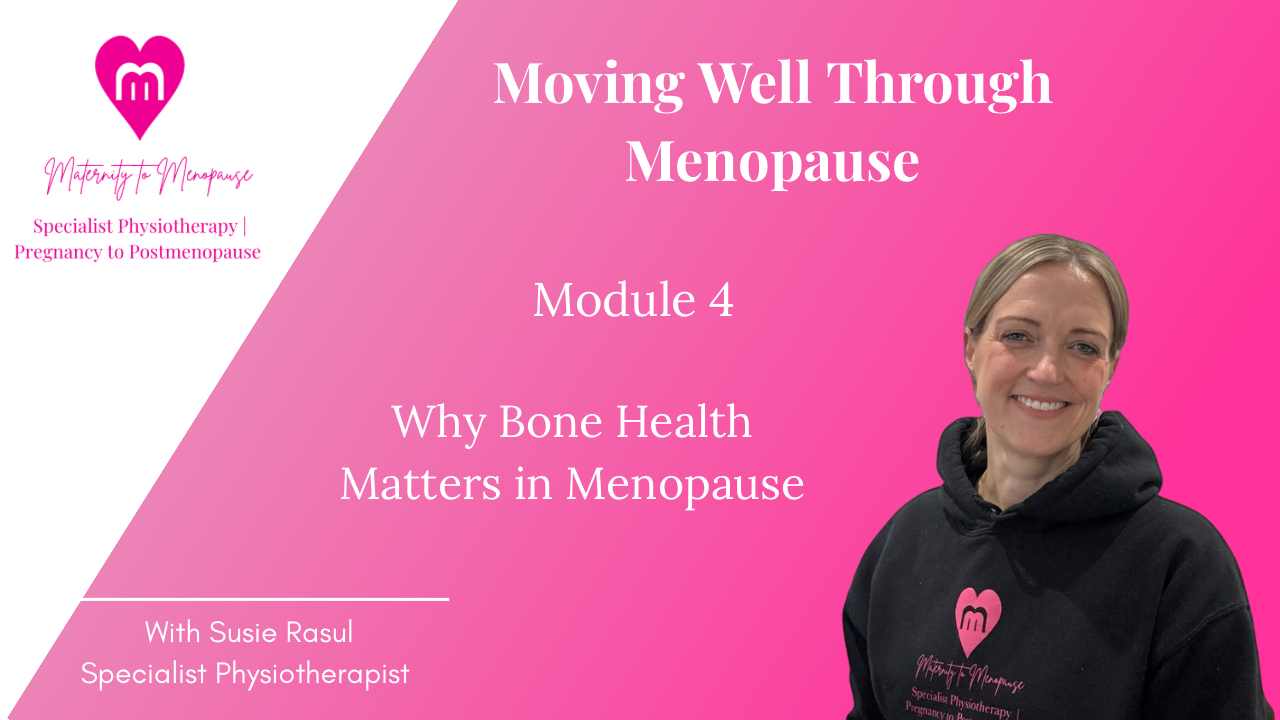
Why Bone Health Matters in Menopause
Oestrogen plays an important role in maintaining bone density.
During menopause, as oestrogen levels decline, bones can gradually lose density. This means bones may become weaker over time if they are not regularly challenged through movement and load.
This is why exercise becomes particularly important during this stage of life.
The good news is that bones respond positively to load and movement, and exercise can help support bone strength.
WHY STRENGTH MATTERS IN MENOPAUSE
As oestrogen levels decline during menopause, the body naturally begins to lose muscle mass.
This process is sometimes called sarcopenia, and it can gradually reduce strength, stability and resilience.
Strength training helps to:
• maintain muscle mass
• protect joints
• support bone density
• improve balance
• reduce injury risk
• improve long-term health and independence.
Building strength is one of the most effective ways to support your body through this stage of life.
STRENGTH DOES NOT MEAN BULKY
One common concern women have is that strength training will make them bulky.
In reality, building large amounts of muscle requires very specific training and nutrition.
For most women, strength training leads to:
• improved muscle tone
• better posture
• increased strength
• improved joint support.
The goal is strength and resilience, not size.These changes can contribute to symptoms such as urgency, leakage, or pelvic heaviness.
Watch the Module 4 Video
Supporting Bone Health in Menopause
In this video we explore:
• why bone density changes during menopause
• the types of movement that support bone health
• how strength and impact exercise help bones stay strong
• how to introduce these activities gradually.
What Types of Exercise Support Bone Health?
Bones respond best to weight-bearing and resistance exercise.
Examples include:
• walking
• stair climbing
• strength training
• dancing
• jogging or running
• impact-based activities such as hopping or skipping (if appropriate)
These types of movement create gentle stress through the skeleton, which helps stimulate bone strengthening.
Low-impact activities such as swimming and cycling are excellent for cardiovascular health but do not provide the same stimulus for bone density.
Strength Training and Bone Health
Strength training plays an important role in maintaining bone health.
When muscles contract against resistance, they place load on the bones they attach to. This helps stimulate bone tissue to remain strong.
Strength training also improves:
• muscle strength
• balance
• coordination
• joint support
All of these factors help reduce the risk of falls and fractures later in life.
STARTING WHERE YOU ARE
You do not need to begin with intense exercise to support your bones.
Starting gradually and building up over time is perfectly appropriate.
Examples of simple ways to support bone health include:
• regular walking
• incorporating strength exercises two to three times per week
• gradually introducing impact activities if appropriate for your body
Consistency is far more important than intensity.
Simple Strength Exercises to Begin With
If strength training is new to you, starting with simple movements that use your own body weight or light resistance can be a great place to begin.
The goal is not to push yourself to exhaustion, but to gradually challenge your muscles and allow them to adapt over time.
Examples of simple strength exercises include:
• Squats – strengthening the legs and glute muscles which support daily activities such as standing, walking and climbing stairs.
• Step-ups – helping build leg strength and balance.
• Glute bridges – strengthening the glute muscles which support the hips and lower back.
• Wall push-ups or incline push-ups – building strength through the chest, shoulders and arms.
• Resistance band rows – strengthening the upper back muscles that support posture.
Physio Insight
Many women have spent years being told to avoid impact exercise.
However, appropriate levels of load and impact can actually be beneficial for bone health when introduced gradually and sensibly.
Supporting your bones is not about doing extreme workouts it is about regular, varied movement that challenges your body in safe and manageable ways.
REFLECTION
Take a moment to consider:
• What types of weight-bearing exercise do I currently do?
• Could I add small amounts of strength or impact activity into my week?
• What type of movement do I enjoy most?
You may wish to note your thoughts in your workbook.
Module 4 Workbook
Download the workbook pages for this module to help you reflect and capture your thoughts.
In the workbook you will find prompts that help you think about:
• your current exercise routine
• how often you include strength or weight-bearing activity
• ways you might gradually support your bone health through movement
• small changes that could help you build strength and resilience over time.
The aim is not to make large changes all at once, but to help you begin thinking about how movement can support your body during menopause and beyond.